


Django View의 ORM
2023.03.23.


View의 ORM
1. 사전세팅
1-1. app URLs 분할 및 연결
- 프로젝트 폴더에서 articles 앱으로 articles.urls 분배
# crud/urls.py

from django.contrib import admin
from django.urls import path, include

urlpatterns = [
    path('admin/', admin.site.urls),
    path('articles/', include('articles.urls')),
]- articles 앱에서 url 받아 연결
# articles/urls.py

from django.urls import path

app_name = 'articles'
urlpatterns = []
1-2. index 페이지 작성
<articles 앱 url 작성>
# articles/urls.py

from django.urls import path
from . import views

app_name = 'articles'
urlpatterns = [
    path('', views.index, name='index'),
]
<articles 앱 view 함수 작성>
# articles/views.py

def index(request):
    return render(request, 'articles/index.html')
<articles 앱 index 템플릿 작성>
<!-- articles/index.html -->

<h1>Articles</h1>
2. 조회
2-1. 전체 게시글 조회
<articles 앱의 views에서 index 함수 정의>
# articles/views.py

from .models import Article


def index(request):
    articles = Article.objects.all()
    context = {
        'articles': articles,
    }
return render(request, 'articles/index.html', context)models에서 Article 모델을 가져오고, QuerySet API 메서드.all()을 사용하여 모든 데이터 객체를 가져와 articles 변수에 담기context객체를 생성하여 articles 키에 데이터 객체를 담은 변수 articles를 값으로 받기- 렌더링하는 템플릿 articles/index.html에 context 보내기
<articles앱의 index.html에서 보낸 articles 객체 데이터 사용>
<!-- articles/index.html -->

<h1>Articles</h1>
<hr />
{% for article in articles %}
<p>글 번호: {{ article.pk }}</p>
<a href="{% url 'articles:detail' article.pk %}">
  <p>글 제목: {{ article.title }}</p>
</a>
<p>글 내용: {{ article.content }}</p>
<hr />
{% endfor%}- DTL 태그 for 구문을 사용하여 articles 객체를 순회하고 점표기법으로 각 데이터의 번호, 제목, 내용에 접근하여 렌더링
- url 태그로 각 글의 제목을 누르면 상세페이지로 이동
- detail 함수에서 사용할 pk인자를 article.pk로 담아 보내기
2-2. 단일 게시글 조회
<url로 디테일 페이지 설정>
# articles/urls.py

urlpatterns = [
    ...
    path('<int:pk>/', views.detail, name='detail'),
]
<디테일 페이지 처리하는 view의 detail 함수 정의>
# articles/views.py

from .models import Article


def detail(request, pk):
    article = Article.objects.get(pk=pk)
    context = {
        'article': article,
    }
return render(request, 'articles/detail.html', context)- models에서 Article 모델을 가져와 QuerySet API 메서드 중
.get()메서드를 사용한다. - 함수의 인자로
request 요청과 함께 어떤 게시글을 조회할 지, 찾기위한 Unique 값인pk(primary key)를 받는다. - 따라서 get에서 pk값이 인자로 보낸 pk와 같은 모델 데이터를 article 변수에 담기
- context 객체에 article 키에 변수 article을 값으로 지정
- detail.html 렌더링 페이지에 context 보내기
<받은 article 데이터 렌더링>
<!-- templates/articles/detail.html -->

<h2>DETAIL</h2>
<h3>{{ article.pk }} 번째 글</h3>
<hr />
<p>제목: {{ article.title }}</p>
<p>내용: {{ article.content }}</p>
<p>작성 시각: {{ article.created_at }}</p>
<p>수정 시각: {{ article.updated_at }}</p>
<hr />
<a href="{% url 'articles:index' %}">[back]</a>- 점표기법을 통해 접근하여 렌더링한다.
3. 생성
3-1. 생성 view 함수 로직
- 2가지의 view 함수가 필요하다.
입력을 받는페이지를 렌더링new데이터를 DB에 저장하는create
- new 로직 작성
<url 생성>
# articles/urls.py

urlpatterns = [
    ...
    path('new/', views.new, name='new'),
]
<view 함수에서 new 템플릿으로 이동시키는 함수 생성>
# articles/views.py

def new(request):
return render(request, 'articles/new.html')- articles의 new.html만 렌더링하면 되기에 따로 context를 생성하거나 보내지 않음
<사용자의 입력을 받는 new 템플릿 생성>
<!-- templates/articles/new.html -->

<h1>NEW</h1>
<form action="{% url 'articles:create' %}" method="GET">
  <div>
    <label for="title">Title: </label>
    <input type="text" name="title" id="title" />
  </div>
  <div>
    <label for="content">Content: </label>
    <textarea name="content" id="content"></textarea>
  </div>
  <input type="submit" />
</form>
<hr />
<a href="{% url 'articles:index' %}">[back]</a>
- create 로직 작성
<url 생성>
# articles/urls.py

urlpatterns = [
    ...
    path('create/', views.create, name='create'),
]
<템플릿 작성>
<!-- templates/articles/create.html -->

<h1>게시글이 문제없이 작성되었습니다.</h1>
<생성된 정보를 저장할 create 함수 생성>
# articles.views.py

def create(request):
    title = request.GET.get('title')
    content = request.GET.get('content')

    # 저장 방법1
    # article = Article() 인스턴스 생성
    # article.title = title 제목 담기
    # article.content = content 내용 담기
    # article.save() 저장

    # 저장 방법2
    article = Article(title=title, content=content)  # 인스턴스 생성 및 정보 담기
    article.save  # 저장

    # 저장 방법3
    # Article.objects.create(title=title, content=content) 생성, 담기, 저장을 한 번에 실행

return render(request, 'articles/create.html')- new.html의 form에서 입력받은 내용은
method="GET"으로 url의request에 담겨서 전달됨 - 따라서
request.GET.get()으로 request 자체를 참조함 - ORM 구문을 활용하여 model에 저장하기
- 저장이 완료되면 create.html로 보내진다.
4. HTTP request methods
- 게시글 작성 후, 완료를 나타내는
페이지를 렌더링하는 것은작성의 요청에서는 적절한 응답이 아니다.
4-1. redirect()
- 인자에 작성된 주소로 다시 요청을 보냄
# views.py

from django.shortcuts import render, redirect


def create(request):
    title = request.GET.get('title')
    content = request.GET.get('content')
    article = Article(title=title, content=content)
    article.save()

return redirect('articles:detail', article.pk)- redirect 호출을 통해 작성된 그 article 상세 페이지를 조회하는 url을 실행함
- 두 번째 인자로 해당 기사의 pk값이 필요
4-2. GET & POST
- 데이터에
어떤 요청(행동)을 원하는지를 나타내는 것
- GET method
- 특정 리소스를
조회하는 요청 - 반드시 데이터를 가져올 경우에만 사용해야 함
- GET으로 데이터를 전달하면
Query String형식으로 보내짐
ex) http://127.0.0.1:8000/articles/create/?title=제목&content=내용- 조회하는 데이터 : ? 뒤의 title=제목&content=내용
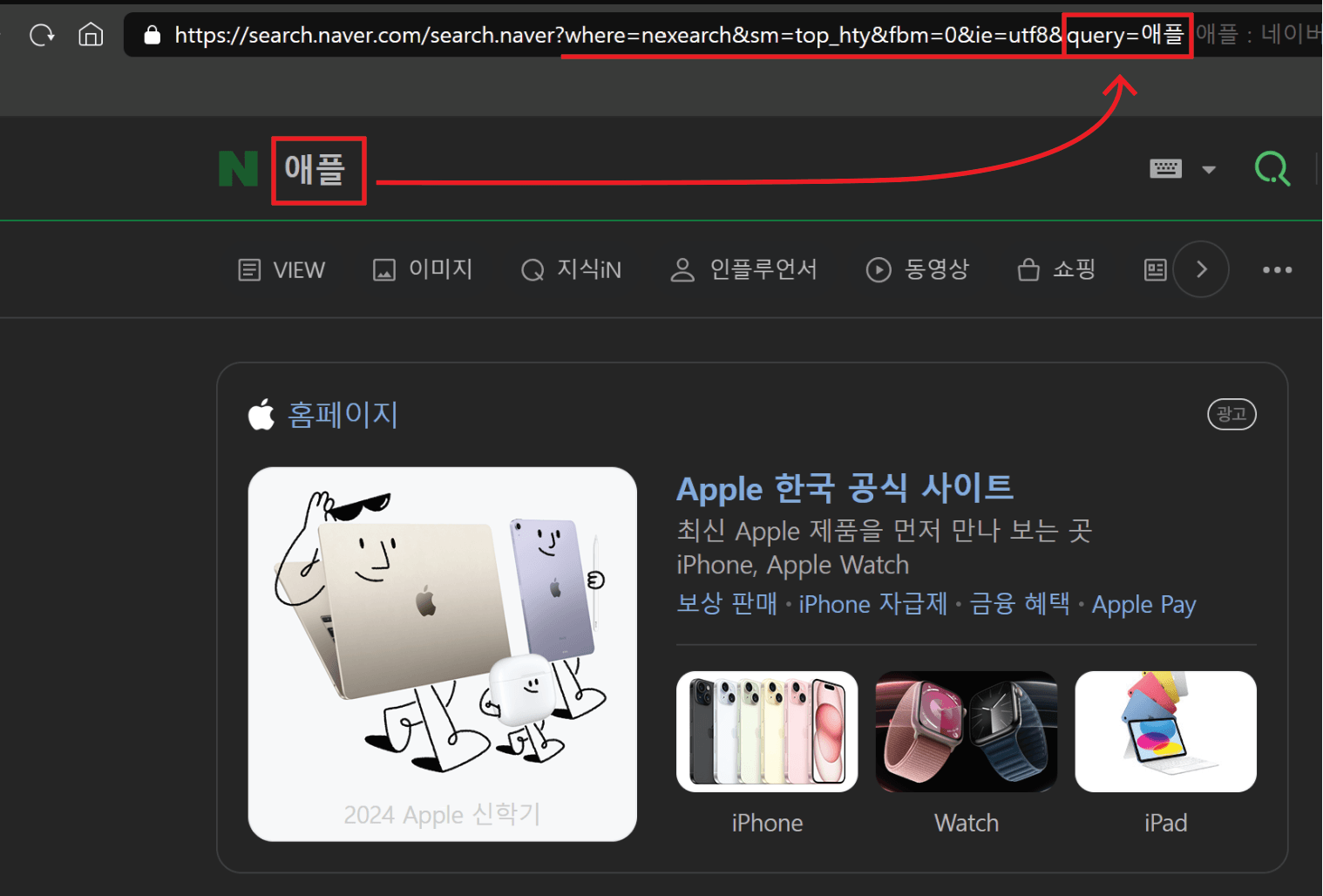
네이버 검색 시 GET method를 통해 Query String 형태로 url에 담겨 전달
- POST method
- 특정 리소스에
변경사항을 만드는 요청 - HTTP Body에 데이터가 담겨 보내진다.
ex) http://127.0.0.1:8000/articles/create/?title=제목&content=내용- 변경하는 데이터 : ? 뒤의 title=제목&content=내용
<!-- templates/articles/new.html -->

<form action="{% url 'articles:create' %}" method="POST">...</form>- 이 경우, html의 form 태그의 method 속성을
method="POST"로 해야함
# articles/views.py

def create(request):
    title = request.POST.get('title')
    content = request.POST.get('content')
...- view 함수에서도 request 데이터 참조 시,
request.POST.get()으로 POST사용 - 하지만 이 상태에서 실행 시,
403 에러가 발생 CSRF Token이 누락되었다는 메시지가 뜨게 됨
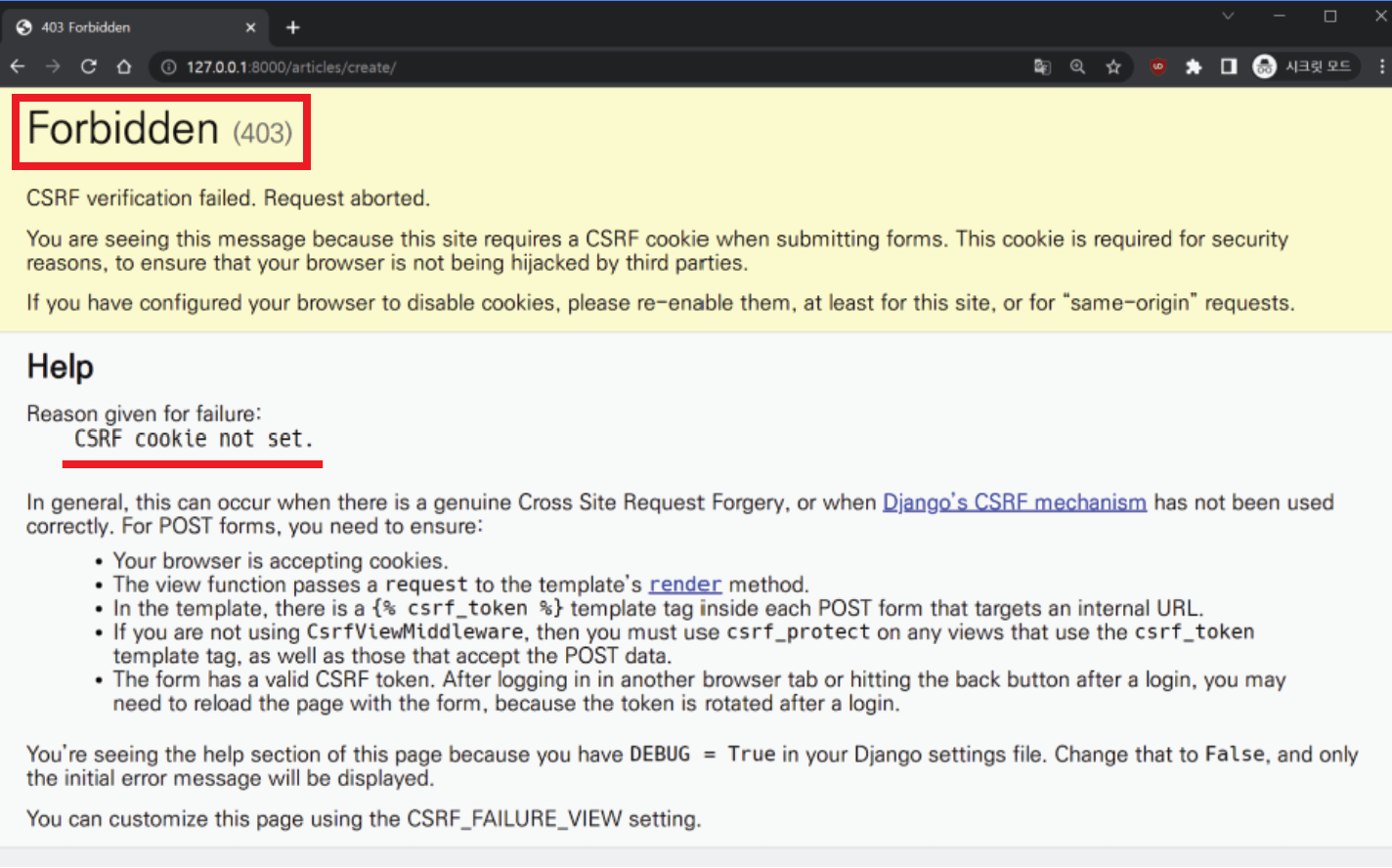
POST method 사용 시 403 에러 발생
- CSRF
Cross-Site-Request-Forgery의 약자- 사이트 간 요청 위조의 뜻을 가지고 있음
- 웹페이지의
보안에 취약하여 수정, 삭제 등의 작업을 하게 만드는 공격 방법으로 위험하다.
- Security Token (CSRF Token)
- 대표적인 CSRF 방어 방법으로 서버는 사용자 입력 데이터에
임의의 난수 값(Token)을 부여함 - 매 요청마다 해당 Token을 포함하여 전송시키도록 함
- 서버에서 요청 받을 때마다 전달된 Token 값이
유효한지 검증하여 응답을 수행함
<!-- templates/articles/new.html -->

<form action="{% url 'articles:create' %}" method="POST">{% csrf_token %}</form>- html에서 DTL 태그인
csrf_token태그를 사용하여 사용자에게 토큰 값을 부여하고 이후, 요청마다 토큰 값도 함께 서버로 전송되도록 Django에서 지원함 POST method의 경우, 데이터 베이스에 변경사항을 만드는 요청이므로위변조의 위험을 방지하기 위해 토큰 값으로 신원확인을 함
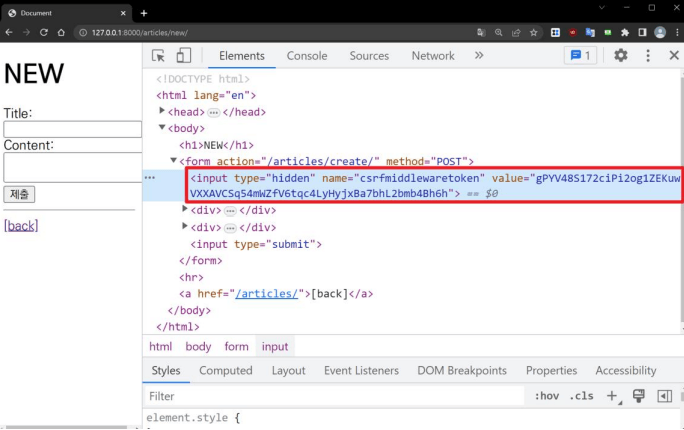
csrf token을 부여함
5. 삭제
<삭제 요청하는 url 생성>
# articles/urls.py

urlpatterns = [
    path('<int:pk>/delete/', views.delete, name='delete'),
]
<삭제를 수행하는 delete 함수 생성>
# articles/views.py

def delete(request, pk):
    article = Article.objects.get(pk=pk)
    article.delete()
return redirect('articles:index')- 어떤 게시글을 삭제할 지 찾기위해 pk 값을 url로 같이 받음
- pk=pk로 해당 게시글을 찾고 delete 수행
- 삭제 후, index페이지로 리다이렉트된다.
<!-- articles/detail.html -->

<form action="{% url 'articles:delete' article.pk %}" method="POST">
  {% csrf_token %} ...
  <input type="submit" value="DELETE" />
</form>- html에서 form을 통해 delete url로 보내고 method는 POST로 설정
- POST method 방식을 사용하기에
csrf_token반드시 추가해야함
6. 수정
6-1. 수정 view 함수 로직
- 2가지의 view 함수가 필요하다.
수정되는 입력을 받는페이지를 렌더링edit수정한 데이터를 DB에 저장하는update
- edit 로직 작성
<수정 페이지로 이동을 요청하는 url 작성>
# articles/urls.py

urlpatterns = [
    path('<int:num>/edit/', views.edit, name="edit"),
]
<기존의 데이터를 담은 수정 페이지를 렌더링해주는 edit 함수 작성>
# articles/views.py

def edit(request, pk):
    article = Article.objects.get(pk=pk)
    context = {
        'article': article,
    }
return render(request, 'articles/edit.html', context)- pk로 어떤 기사를 수정할지 모델에서 찾아 article 변수에 담기
- context 객체에 키 ‘article’에 변수 article을 값으로 지정
- edit.html을 렌더링하고 context를 함께 전달하기
<edit 템플릿 렌더링하기>
<!-- articles/edit.html -->

<h1>EDIT</h1>
<form action="{% url 'articles:update' article.pk %}" method="POST">
  {% csrf_token %}
  <div>
    <label for="title">Title: </label>
    <input type="text" name="title" id="title" value="{{ article.title }}" />
  </div>
  <div>
    <label for="content">Content: </label>
    <textarea name="content" id="content">{{ article.content }}</textarea>
  </div>
  <input type="submit" />
</form>- form을 생성하고 변경되는 정보를 보내기 때문에 method는 POST로 지정
- POST method는 csrf_token 반드시 추가
- 수정 시, 이전에 작성된 내용이 출력되도록
input의 value 속성에는 기존의 데이터article.title을 넣고textarea태그는article.content를 받음
- update 로직 작성
<수정 정보를 저장을 요청하는 url 생성>
# articles/urls.py

urlpatterns = [
    path('<int:num>/update/', views.update, name='update'),
]
<수정을 저장할 update 함수 작성>
# articles/views.py

def update(request, pk):
    article = Article.objects.get(pk=pk)
    article.title = request.POST.get('title')
    article.content = request.POST.get('content')
    article.save()
return redirect('articles:detail', article.pk)- 받은 pk로 모델 Article에서 해당 기사를 찾아
title,content에 request.POST 객체의 정보를 담아 저장한다. - 저장이 완료되면 해당 기사의 상세 페이지로 리다이렉트된다.


조정곤
주니어 프론트엔드 개발자


